Asset Management
Definition
Asset management is the systematic process of developing, operating, maintaining, and selling assets in a cost-effective manner to maximize their value, align with organizational or personal goals, and mitigate risks.

Asset management is the systematic process of developing, operating, maintaining, and selling assets in a cost-effective manner to maximize their value, align with organizational or personal goals, and mitigate risks.
is defined as an enterprise that manages customers’ funds by accumulating and investing them in various provisions such as stocks, real estate, bonds, and other investments. AMCs not only manage portfolios of high-net-worth individuals (HNWI) but also look after hedge funds, pension funds, mutual funds, index funds, and Exchange Traded Funds (ETFs) using funds from small investors and combining them into a single consolidated portfolio. AMCs act as an intermediary between investors and investment instruments like bonds, stock, real estate, and other assets. The investors include HNWIs, retail and institutional investors, government organisations and private sectors, etc.
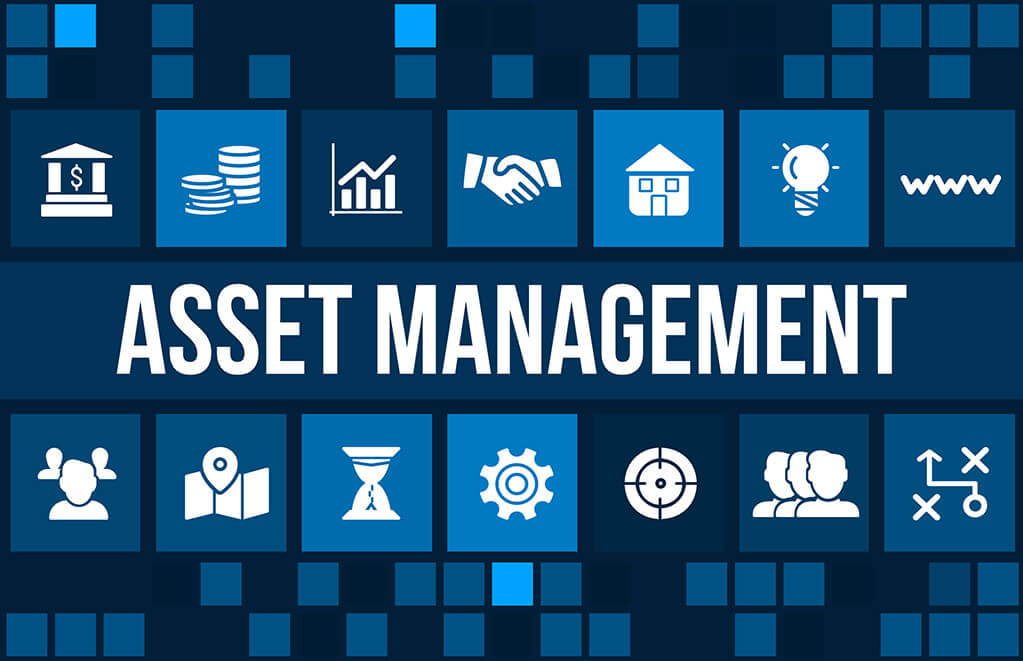

The main function of at CF Banque is to make the best use of client’s asset in the most efficient, effective and profitable investment possible. So, as an initial step of investment, AMCs do thorough research on the market and then analyses the data and facts so as to define the financial goals and objective. In this step of research and analysis, careful judgement of the risk associated with each financial deal is looked into.

The next step is the allocation of assets, i.e., selecting the assets and securities in which investment would be carried on. After selection of assets, allocation of funds takes place to buy those assets and securities. The returns earned from the investments are the profit on the investment and those are shared between the fund manager and the investor.

Once, the market research and fund and asset allocation is conducted, it is time for the portfolio building. The fund managers tries to design a diversified and strong portfolio which can reap high profits for their clients. Lastly, after considering all the relevant factors, they take a decision to either buy, sell or hold those assets or securities.

has developed an integrated institutional asset management platform designed to serve sovereign wealth funds, pension funds, insurance companies, development finance institutions, family offices, corporations and sophisticated private investors. Our asset management philosophy is grounded in long-term capital preservation, disciplined risk-adjusted performance generation and global diversification across asset classes and geographies.

| • Strategic asset allocation driven by macroeconomic analysis |
| • Active portfolio management with dynamic risk calibration |
| • Capital preservation discipline |
| • Global diversification across developed and emerging markets |
| • Liquidity optimization |
| • Governance-centered portfolio construction |
| • Global equity portfolios |
| • Fixed income mandates |
| • Multi-asset balanced funds |
| • Institutional discretionary mandates |
| • Thematic investment vehicles (Energy Transition, Infrastructure, Technology, ESG, Healthcare, Strategic Commodities) |

1. Top-down macroeconomic assessment
2. Bottom-up fundamental analysis
3. Quantitative screening models
4. Dynamic volatility management
5. Continuous drawdown control
6. Stress scenario simulation

• Risk-adjusted return optimization
• Sharpe and Sortino ratio analysis
• Correlation management
• Beta calibration
• Duration management in fixed income portfolios

maintains advanced capabilities in credit analysis and fixed income portfolio management across:
• Investment grade corporate credit
• High yield markets
• Emerging market sovereign debt
• Structured credit instruments
• Hybrid capital securities
• Green and sustainability-linked bonds

• Detailed cash flow projection modeling
• Balance sheet resilience assessment
• Sector stress testing
• Liquidity profile analysis
• Debt sustainability modeling
• Regulatory capital impact analysis
This disciplined approach enables us to generate stable income streams while mitigating default and liquidity risks.

CFBANQUE INVESTMENT fully integrates Environmental, Social and Governance (ESG) criteria into its investment decision-making process.

• Align investments with global sustainability standards
• Reduce long-term systemic risks
• Enhance risk-adjusted returns
• Improve transparency and accountability
• Support sustainable economic development
We incorporate ESG scoring methodologies, climate risk analysis and governance screening tools into portfolio selection and monitoring processes.