Investment Research

CF Banque Economic & Investment Research

Our Main Articles

articla-00

The Challenges and Expectations

Africa is the most richest continent, But still suffer extreme poverty on a large scale, bad education, leverage health services, and high unemployment. African people believe that all these negative manifestations are the product of corruption that has spread in all state organs and the main indicator of slow growth in Africa.

articla-01

Impact Investing

More investors want to back businesses that contribute to social change, but are impact funds the only approach? Research by Shawn Cole, Leslie Jeng, Josh Lerner, Natalia Rigol, and Benjamin Roth challenges long-held assumptions about impact investing and reveals where such funds make the biggest difference.


articla-02

Investors and Crypto

Bitcoin might seem like the preferred tender of conspiracy theorists and criminals, but everyday investors are increasingly embracing crypto. A study of 59 million consumers by Marco Di Maggio and colleagues paints a shockingly ordinary picture of today's cryptocurrency buyer. What do they stand to gain?


articla-03

Unlock Microfinance's Full Potential

Microfinance has been seen as a vehicle for economic mobility in developing countries, but the results have been mixed. Research by Natalia Rigol and Ben Roth probes how different lending approaches might serve entrepreneurs better. In the 50 years since modern microfinance was introduced as a tool to fight poverty.


The Challenges and Expectations

African Economic 2025

challenge

By Laurent Bien
CF Banque Chairman
Although, Africa is the most richest continent, But still the most of african people feel disappointed towards their governments. They compare the pattern of europian life to them. Extreme poverty on a large scale, bad education, leverage health services, and high unemployment. They believe that all these negative manifestations are the product of corruption that has spread in all state organs. Therefore, the majourity do not feel any hope for a bright future, which leads them to seek refuge in Euorpe or accept the fait accompli, which is one of the main indicators of slow growth in African countries. The development is based on the participation of all classes of the people. The expectations for 2025 include moderate GDP growth around 3.5 - 4.5% depending on the source, with some countries growing over 5%. Drivers are private consumption, investments, AfCFTA, and digital transformation. Challenges include high debt, inflation (though decreasing), unemployment, climate vulnerabilities, and structural issues like infrastructure gaps. Policy recommendations focus on reforms, regional integration, debt management, and investing in human capital and infrastructure.

Growth Outlook

afr-eco

Moderate Economic Expansion: Sub-Saharan Africa’s GDP is projected to grow by 3.5% in 2025, accelerating to 4.3% by 2026-2027, driven by private consumption, stabilizing inflation, and investments in sectors like energy and digital infrastructure. The African Development Bank (AfDB) forecasts slightly higher growth at 4.1% in 2025, with 12 of the world’s 20 fastest-growing economies located in Africa, including South Sudan 27.2% and Senegal 9.3%.Afreximbank projects 4.0% growth for the continent, with 41% of African economies expected to exceed 5% growth , highlighting regional resilience despite global stagnation.

Drivers of Growth: Regional trade integration through the African Continental Free Trade Area (AfCFTA) is poised to boost intra-African trade, currently at just 16% of total trade, by reducing tariffs and non-tariff barriers. Digital transformation and renewable energy investments (e.g., Mission 300’s goal to connect 300 million people to electricity by 2030) are critical for job creation and economic diversification.

Statistics

chart01
Country20242023
Niger14.4%7.3%
Senegal11.6 %10%
Zambia8.6%3.0%
Rwanda8%8.1%
Ethiopia7.9%7.5%
Seychelles7.2%10.2%
Benin6.8 %6.6%
Djibouti6.8%7.5%
Cape Verde6.7%3.4%
Ivory Coast6.5%5.6%
Congo6.2%8.9%
Guinea5.9%4.0%
Gambia5.6%5.2%
Burkina Faso5.5%4.9%
Guinea Bissau5.3%5.2%
Uganda5.3%6.7%
Tanzania5.2%5.9%
Togo5.1%6.3%

chart02
Country20242023
Mauritius4.8%5.2%
Swaziland4.8%0.5%
Liberia4.7%4.8%
Mauritania4.7%7.1%
Zimbabwe4.5%6.5%
Mali4.4%6.5%
Egypt4.3%3.5%
Madagascar4.3%4.2%
Kenya4.0%4.6%
Nigeria3.8%3.4%
Morocco3.7%4.3%
Angola3.6%5.5%
Ghana3.6%7.2%
Lesotho3.5%4.5%
Sierra Leone3.4%3.5%
Comoros3.3%2.6%
Gabon3.2%2.4%
Chad3.1%4.9%
Namibia3.1%3.2%
Cameroon3.0%3.7%
chart03
Country20242023
Eritrea2.9%2.8%
Burundi2.8%1.8%
Somalia2.8%2.4%
Republic of the Congo2.7%3.2%
Tunisia2.4%1.8%
Algeria2.0%3.7%
Malawi1.8%1.9%
Sao Tome and Principe1.7%0.5%
Equatorial Guinea1.6%-5.1%
Central African Republic1.1%1.0%
South Africa0.9%0.4%

These the 5 countries have negative growth rate result from civil wars such Sudan. The numbers for the past two years are significant which prove that the only path to growing is the democracy. African people could get rid of European occupation since more than 50 years but still unaware the importance of democracy for getting luxery living. The first step in economic reform begin from education. No progress will acheived until there is a good education where students learn how they discuss their troubles &hardships of their life and respect others' opinions.

Good Education: “serves the surrounding enviornment and provides modern solutions to societal issues.”

Country20242023
South Sudan-0.4%-2.9%
Botswana-2.0%-4.2%
Libya-3.2%9.1%
Mozambique-4.9%3.7%
Sudan-28%-40%
Economic Challenges

African economic face many challenges such as food insecurity due to conflicts, high debt, climate action, the need for investments in human capital and digital infrastructure, debt, trade imbalances, and the need for diversification. All these challenges slow economic growth and kill hopes that oneday we will become in 1st. classification of advanced countries.

High Debt and Fiscal Pressures: Over half of African nations have debt-to-GDP ratios above 60%, with 21 countries in debt distress or at high risk, limiting fiscal flexibility . Public debt interest payments often exceed education or health budgets

Unemployment and Poverty: Despite growth, 43.9% of Africans live in extreme poverty $2.15 per day. Only 3 million formal jobs are created annually for 12 million youth entering the workforce, exacerbating inequality

Climate and Conflict Vulnerabilities: Climate shocks (droughts, floods, etc affected 110 million Africans in 2022, costing $8.5 billion in damages. Conflict-affected regions like the Sahel and Horn of Africa face acute food insecurity, impacting 120 million people.
Infrastructure gaps raise trade costs by 50% compared to global averages, hindering competitiveness
Global Headwinds: Reduced development aid and geopolitical tensions (e.g., Ukraine war fallout) strain economies reliant on commodity exports. Over 50% of African nations depend on oil, gas, or minerals for 60% of export earnings, exposing them to price volatility.

Policy Expectations and Opportunities

Accelerating AfCFTA Implementation: Full execution of AfCFTA could unlock a $3.4 trillion market , reduce reliance on global markets, and foster industrialization through regional value chains. Strategic investments in transport and digital infrastructure are critical to lowering trade costs.

Debt Management and Reforms: IMF and World Bank advocate for pre-emptive debt restructuring and fiscal discipline to stabilize economies. South Africa, for example, is reforming electricity and logistics sectors to attract private investment . Advocacy for [ IMF quota reforms ] and fairer debt sustainability analyses could improve access to affordable financing.

Investing in Human Capital and Digitalization: Expanding access to education, healthcare, and digital skills training [ Rwanda’s gender-inclusive digital programs ] is vital to harness Africa’s youthful population - 740 million working-age individuals by 2050. The World Bank’s Digital Economy for Africa (DE4A) initiative aims to digitally enable all Africans by 2030, fostering innovation and job creation.

Climate Resilience and Energy Transition: Renewable energy investments $190 billion per year needed and climate-adaptive policies [ Congo Basin forest conservation } are priorities to mitigate risks and align with global green transitions

Strengthening Governance: Anti-corruption measures, transparent tax systems, and private-sector empowerment (e.g., Ethiopia’s economic liberalization) are essential to rebuild public trust and attract investments

conculsion

Africa’s 2025 economic trajectory hinges on balancing growth with structural reforms. While the continent is projected to outpace global growth averages, persistent challenges like debt, unemployment, and climate vulnerabilities require coordinated action. Success will depend on leveraging AfCFTA, prioritizing inclusive policies, and securing global partnerships to transform Africa into a hub of sustainable development and innovation. As the Brookings Institution notes, the next five years are pivotal for aligning Africa’s potential with the 2030 SDGs and Agenda 2063

When Does Impact Investing Make the Biggest Impact

Research by Shawn Cole, Leslie Jeng, Josh Lerner, Natalia Rigol, and Benjamin Roth
afr-eco

More investors want to back businesses that contribute to social change, but are impact funds the only approach? challenges long-held assumptions about impact investing and reveals where such funds make the biggest difference. The idea of supporting social change has propelled impact investing assets to more than $1 trillion. But what if those funds aren’t as impactful as investors expect?
Recent Harvard Business School research indicates that while impact investors do behave differently in some important ways, the vast majority tend to invest in companies that are also able to raise capital from non-impact investors. More than half of funding rounds involving impact investors include co-investment with traditional, profit-motivated investors.

portfolio.jpeg

“Some impact investors care a lot about additionality. In their mind, if they give a company $1 million equity investment, when nobody else was willing to do that, then that company has more capital and can do things that it couldn't otherwise do,” explains Shawn Cole, the John G. McLean Professor at HBS, who is one of the study’s authors. “But, if there were 20 other venture capital funds that would have been just as happy to give $1 million to that firm, then the capital isn’t additional. This seems to be the case for the majority of the portfolio companies we identify.”
However, Cole pointed out there are different approaches to impact investing. “Most of the dollars raised are deployed in funds seeking market returns, and many of those investors are quite happy to co-invest with traditional venture firms.” Impact investors may seek to influence portfolio companies in other ways.
Cole conducted the research with HBS colleagues Leslie Jeng, senior lecturer; Josh Lerner, Jacob H. Schiff Professor; Natalia Rigol, assistant professor; and Benjamin N. Roth, Purnima Puri and Richard Barrera Associate Professor.


database.jpeg
A year-long database build

Because no truly comprehensive database for impact investing exists, the authors spent more than a year creating their own by compiling nine databases and lists. The authors then set out to track and compare companies and their basic characteristics.
After filtering through 2,747 potential impact investors, the authors wound up with 396 impact investors for their analysis. They looked for language that was more specific than “make the world a better place” and included big players like TPG Alternative & Renewable Technologies.
Using US census data, the researchers cross-referenced portfolio companies, finding some 84 percent matched. They also cross-referenced US impact investing companies with data from Revelio Labs, for an 83 percent match rate, to study what effect the investments had on target companies.


traditional-investing.jpeg
Additional value to traditional investing

The key finding: Impact investment funds mostly buy stakes in companies that traditional financiers would have funded anyway.
Impact investors funded 6,066 firms in 8,125 rounds, representing about 2 percent of all venture capital and growth equity rounds, the authors show. Of the more than 8,000 deals, 60 percent include a traditional private co-investor.
“The takeaway is that the difference is not as large as you might think.”
Both traditional and impact investors had similar portfolio sizes, with roughly 24 companies with 31 investments each, and had operated for about a decade on average. Impact investor deals averaged about $5 million, lower than traditional investments of about $8.7 million.
“The takeaway is that the difference is not as large as you might think,” Cole says. “As an investor, you have a bit of a strategic choice.”


impact-investing.jpeg
Where impact investing makes the most impact

Impact investors approach targets differently than traditional firms, the authors note. They focus on disadvantaged regions and emerging industries, allow for longer time horizons, and take more risk than traditional investors. Impact funds tend to prioritize consumer staples, energy, financials, industrials, materials, real estate, and utilities. Impact investors, on average, target investments in countries with 23 percent less economic output—$9,400 per capita—than those of mainstream companies. Impact-only investments may require more patience, with a roughly 25 percent longer time to reach success.
“It's not simply greenwashing in the sense that there are real differences between impact investing and non-impact investing,” Cole says. “But it’s a matter of degree.”


further-research.jpeg
Areas for further research

The researchers found that employee satisfaction dropped twice as much when impact investors bought a stake in a company, compared to the decline after a traditional investment. That may cast some doubt on the social benefits of impact investing at early stages and deserves further study, they note. The study also suggests that impact investments might benefit companies that can’t raise funds through mainstream channels most, the researchers say. Reporting on impact investing is fast evolving. “There are a lot of really important questions that are hard,” Cole says. “Quite frankly, they may not even be answered in the venture capitalist space. Questions like ‘what are best practices for impact investing?’ Our hope is that these data allow us and other researchers to begin to shed more light on this important sector.”

Investors and Crypto


Research by Di Maggio
‘Not a Bunch of Weirdos’: Why Mainstream Investors Buy Crypto

Bitcoin might seem like the preferred tender of conspiracy theorists and criminals, but everyday investors are increasingly embracing crypto. A study of 59 million consumers by Marco Di Maggio and colleagues paints a shockingly ordinary picture of today's cryptocurrency buyer. What do they stand to gain?
In a little more than a decade, investors have transformed cryptocurrency from a techno-curiosity into a trillion-dollar-plus opportunity that has the potential to one day reshape the global economy. Yet in the past 10 years, little has been revealed about the investors who have signed on for this wild ride.That is, until now. A new study by Harvard Business School professor Marco Di Maggio shows that on average, cryptocurrency investors have higher household incomes, live in wealthier and more educated ZIP codes, like to gamble, frequently use credit cards, and often overdraft their checking accounts. Moreover, these investors are drawn by the lure of potentially higher returns in a “lottery-style payoff” than investors expect with traditional investments. Plus, the COVID-19 stimulus money led new investors to experiment with cryptocurrencies, according to the study.

crypto-01.jpeg

“Crypto is seeing large-scale adoption.”
Yet while crypto investors might have a higher risk tolerance than more typical investors, in many ways they’re more mainstream than some might imagine, Di Maggio says. Crypto investors, he says, make decisions based on the same variables as other investors, which shows they “are not a bunch of weirdos. They look and act just like investors in traditional asset markets.” Understanding this market is increasingly important. Cryptocurrencies’ global value has boomed to a market capitalization of $3 trillion in 2021—still small compared to the $125 trillion total global equity market, but a growing force to be reckoned with, according to the research. "Crypto is seeing large-scale adoption," Di Maggio says. At the same time, the industry finds itself in the spotlight of regulators who are exploring ways to tighten control of the fledgling market. In addition, despite the growth of cryptocurrency, many consumers and businesses remain skeptical. The findings, the authors say, provide the first large-scale portrait of cryptocurrency investors, offering valuable insights for regulators, financial professionals, businesses, and consumers in understanding this emerging market.


crypto-04
A study of 59 million US consumers

Di Maggio, the Ogunlesi Family Associate Professor of Business Administration at HBS, collaborated on the research with Darren Aiello, Jason Kotter, and Mark J. Johnson of Brigham Young University; Scott R. Baker of the Northwestern University Kellogg School of Management; and Tetyana Balyuk of the Emory University Goizeta Business School. The economists analyzed the bank account and credit card transactions of more than 59 million US consumers between January 2010 and May 2021. They then supplemented this massive database with demographic data, such as income ranges and places of residence. To complete their study, the researchers focused on transaction records and descriptions showing deposits to and withdrawals from major cryptocurrency exchanges, such as Coinbase. One of the significant strengths of the data, the authors say, was the ability to examine financial information and the decisions of crypto and non-crypto investors to make comparisons. The breadth of the data also allowed the team to compare crypto investing behavior to traditional investment vehicles by the same set of investors to draw additional conclusions.


crypto-05
Two surges in crypto’s popularity

The heart of the paper sought to answer a fundamental question: Who invests in crypto? Among the findings: Booming interest in Bitcoin in 2017 drove new investors into cryptocurrency at a rate of about 10,000 people per month. Three years later, a second surge brought in new investors but at a slower rate of about 5,000 investors per month. During both periods, investors devoted about 3 percent of deposits and 6 percent of spending to purchasing cryptocurrency. Sixty percent of crypto transactions are made by investors earning more than $75,000, while those earning $45,000 or less accounted for another 20 percent of the transactions.

This shows, Di Maggio says, that the crypto market consists of “average US investors that are using crypto as an alternative asset class in their portfolio.”


covid-19
Impact of COVID-19 stimulus

Fiscal policy to help support the US economy during the pandemic gave researchers an opportunity to look at the impact of an influx of liquidity into the market and its relationship to cryptocurrency investing. Di Maggio and his team examined levels of cryptocurrency investing at intervals that aligned with the timing of US stimulus payments. Economists had predicted that because stimulus money went to many households that didn’t necessarily need it, much of the money would be invested or saved, rather than spent to spur the economy.
“We found that they were using the stimulus money partly by consuming it, partly by paying their liabilities, and partly by investing it into both traditional assets and crypto.”
Di Maggio found that was only partially true. His analysis of transactions from the database found that consumers invested $5.09 in crypto and $8.23 in traditional assets for every $1,000 in stimulus money.

“We found an effect, but it’s not that big,” he says. “That’s why I say it doesn’t feel like these investors are doing anything crazy. We found that they were using the stimulus money partly by consuming it, partly by paying their liabilities, and partly by investing it into both traditional assets and crypto.”


crypto-06
What to know about crypto currency investors

Di Maggio's findings offer some key insights about the world of cryptocurrency investing:
• More people are embracing crypto. Managers who have been contemplating whether it makes sense for their companies to start accepting cryptocurrency as a form of payment may want to consider doing so. Since the study suggests that crypto investing has edged into the mainstream, it means businesses are likely to see more consumer demand for spending of crypto as a currency in lieu of dollars and cents.
• Crypto may offer inflation protection. Not withstanding the correlation between crypto tokens and other assets has increased over time, Di Maggio found indications that household investors still saw crypto as a hedge against price increases. Many in the investment community have argued that cryptocurrencies, Bitcoin in particular, provide a hedge against inflation because they are not subject to the decisions of a government or central bank, and feature a limited supply schedule that make Bitcoin resemble digital gold.
• Investors often don’t stick with crypto for the long haul. Investors seem more willing to cash out of crypto investments than traditional investments, a sign that some are drawn by the promise of a lottery-style payout.
For managers and business leaders, “one reasonable view is that the market is more mature than people believe … We are not talking about a niche market anymore,” says Di Maggio.


microfinance

Unlock Microfinance's Full Potential

What Would It Take to Unlock Microfinance's Full Potential?

Microfinance has been seen as a vehicle for economic mobility in developing countries, but the results have been mixed. Research by Natalia Rigol and Ben Roth probes how different lending approaches might serve entrepreneurs better. In the 50 years since modern microfinance was introduced as a tool to fight poverty, institutions have distributed hundreds of millions of loans to people in developing countries. Such loans are repaid at rates often as high as 98 percent. Those metrics alone seem to tell a convincing story about the sector’s success, but to what extent have the loans meaningfully improved livelihoods? That question has been more difficult to track, say Natalia Rigol and Ben Roth. Both development economists and assistant professors at Harvard Business School, Rigol and Roth are among the academics searching for solutions to make the next generation of microfinance tools even more transformative. The HBS Alumni Bulletin recently talked to them about their research.

Note: “Around 2005 and 2010, some large-scale, randomized control studies started to emerge that all showed the same surprisingly lukewarm message about the impact of microfinance.”


microfinance

Bulletin: One of the great surprises of microfinance has been the astonishingly high rates of loan repayment, at around 96 or 98 percent. How do you interpret that?
Ben Roth: One metric of success is just financial inclusion; and perhaps the fact that there are new borrowers who are taking loans and repaying them is evidence enough that this sector has had enormous impact. But another view that we’re also deeply sympathetic to is that, 30 years into the microfinance story, around 2005 and 2010, some large-scale, randomized control studies started to emerge that all showed the same surprisingly lukewarm message about the impact of microfinance on livelihoods.
Natalia Rigol: People expected to see shifts in household income, business growth, and consumption, but across the board these experiments found no movement, on average. It was quite controversial. When we tell microfinance practitioners about this evidence, it can be hard for them to really engage with it because of their work on the ground and the anecdotes they hear about lives that have been transformed.
Roth: Meanwhile, there’s a parallel body of work that tells a very different story. In randomized control trials all over the world, instead of giving access to a loan, a one-time cash grant was found to have transformative impacts on livelihoods and businesses six months, one year, five years, 10 years later. We learned from those studies that there are many small-business owners who could put capital to very good use, but microfinance has not yet unlocked those potential opportunities.
Bulletin: How are these findings shaping your work?
Roth: There are two strands of research that form the basis of our conviction about how microfinance could do better. One is about the timing of repayment obligations. The standard microfinance contract has very little discretion in terms of when you repay your loan, so Natalia and her collaborators did one of the earliest studies to look at what happens if we relax that requirement and let people wait up to two months to repay their first installment. People who got the more flexible contract invested significantly more in their businesses and earned higher returns as a result. Their businesses were bigger three years later, and they are still bigger now, 10 years later. That paper was very influential and one of the first indications to academics that small changes to the structure of microfinance contracts could have big consequences for how people spend the money and its impact on their businesses and their livelihoods.

Note: “Ten years ago, India didn’t have social security numbers, so that is a first-order constraint.”

microfinance

Bulletin: When they have a grace period, how do people use that time and capital differently?
Rigol: Giving people more time up front allows them to better match the cash flows of their business with their repayment obligations. If you are a tailor and you’re switching from sewing by hand to using a sewing machine, you have to learn how to use the machine and make sure your customers are going to like the products that you’ll produce with the sewing machine. The grace period afforded people the time to make significant investments like that.
The second strand of our work is developing new ways to identify which borrowers have high-growth opportunities. Microfinance often operates in environments that are information-scarce, in terms of screening borrowers. Ten years ago, India didn’t have social security numbers, so that is a first-order constraint. We have been going to the neighborhoods where these entrepreneurs live, forming them into groups, and asking people which of their neighbors have the most potential to grow their business.
Roth: About 10 years ago, Natalia and I did a randomized experiment in western India, where we gave out $100 cash grants to a random set of microentrepreneurs. We found that the return on investment to a random entrepreneur in the community is about 8 percent per month, which is a big effect in terms of livelihood generation. But the people who were nominated by their community as high-growth entrepreneurs had a 25 percent monthly return on investment, and the people who weren’t nominated averaged no return at all. That was our first signal that some of these alternative screening mechanisms based on soft information could transform how we think about which entrepreneurs to target with larger or more flexible loans.
Bulletin: Are these findings making their way into practice?
Roth: Not very quickly, so we are working with a microfinance institution in India called Sanghamithra Rural Financial Services to figure out how to operationalize these insights. We have developed two credit products with Sanghamithra that are based on these ideas, and we’ve just deployed the first few dozen of each of them.
The first is a graduation loan. For many borrowers, it’s hard to get a formal bank loan that’s more than $1,200 but less than $10,000, so we’ve been identifying borrowers from Sanghamithra who have demonstrated that they can handle loans of $1,200—and then we’re using community information to figure out which of them could handle loans up to five times that amount. (Larger sums may help them take the next step in growing their business.) These borrowers are already organized in groups, so there’s a community of people that knows them very well. We do a variety of formal and informal interviews to understand who they’d feel comfortable taking a bet on, and then we do a lot of work with the borrower to come up with a personalized repayment schedule that matches their cash flows.
Rigol: We’ve given out about 20 loans so far, and we’re planning to run a randomized evaluation to understand the impact of these kinds of loans on livelihoods. But this is not a research-first project; it is a practice-first project. One of our principal motivations is to develop a set of loan products that will not only help people grow their livelihoods but also to do so in a manner that is profitable and therefore scalable.

Note: “We believe in these ideas, and we’re trying to validate them beyond what’s done by traditional academic papers.”
microfinance-01.jpeg

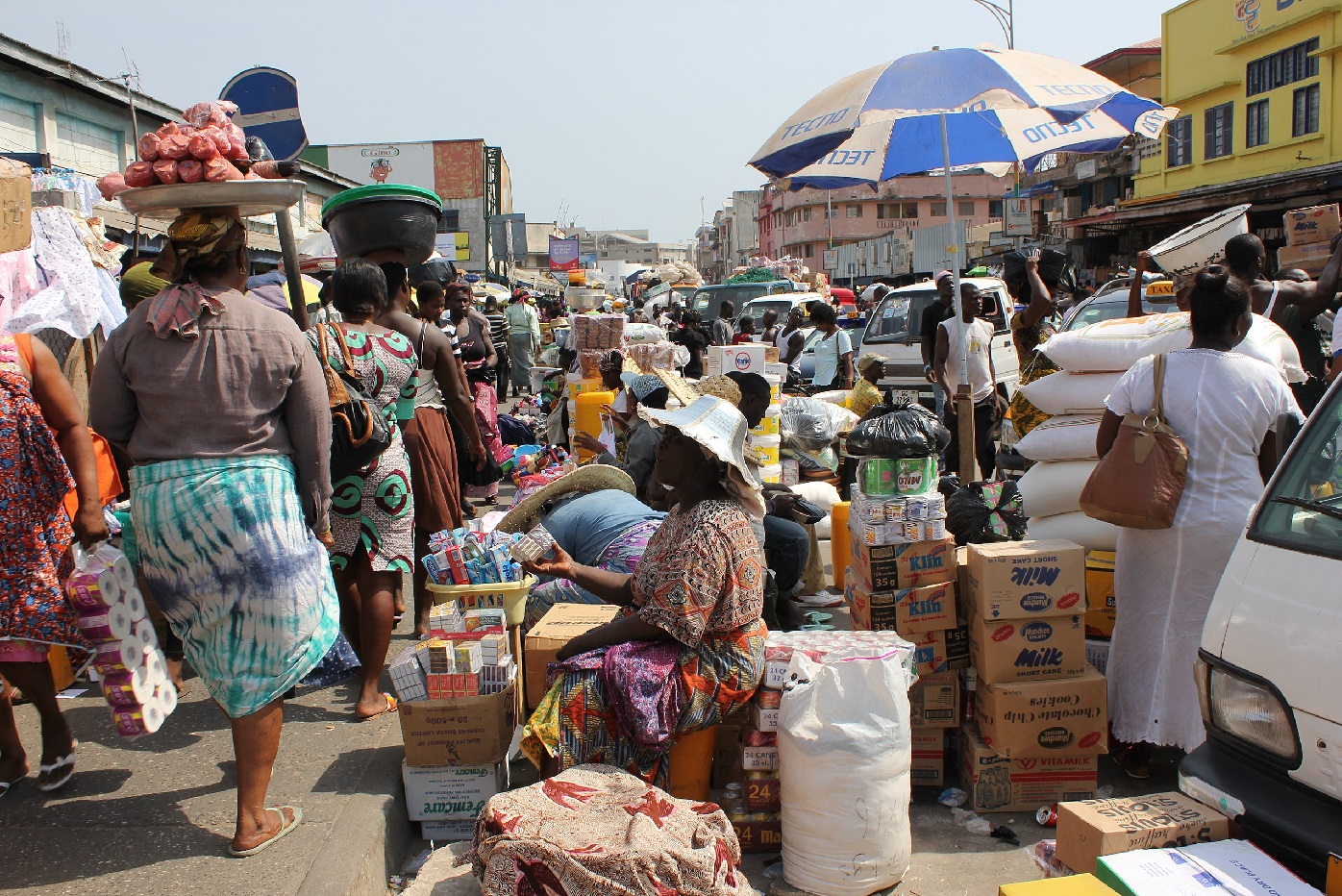
Roth: The second product that we’re working on is a loan for market vendors who often rely on informal working capital loans at exorbitant interest rates. Vendors have volatile cash flows, and the one-size-fits-all microfinance repayment model is not a good fit. We are developing a loan product that matches their cash flows, with a repayment schedule between a day and a month. The loans start small but grow as borrowers demonstrate good repayment. They’ve been very popular.
Rigol: A year ago, when CEOs of microfinance institutions heard about these ideas, their response was, “You guys are nuts, but it would be amazing if you can figure this out.” So far, we have good repayment, and the idea that we are bringing new innovations and risk capital to the industry has piqued a lot of curiosity.
Bulletin: So with these products you’re bridging the gap between research and practice?
Rigol: Well, it’s a big gap, and we’re small people. But we believe in these ideas, and we’re trying to validate them beyond what’s done by traditional academic papers.
This article originally appeared in the HBS Alumni Bulletin.